You join a Discord server recommended by someone whose taste you trust. The channel list looks promising. There are hundreds of members online. You introduce yourself, get one emoji reaction, and then nothing. Within a week you have muted notifications. Within a month you have forgotten it existed. This is not a niche failure. It happens on Reddit, in Slack workspaces, in metaverse builds with stunning architecture and nobody home. The question worth sitting with is not why some communities fail to grow, but why so few of them ever feel genuinely inhabited.
The answer has almost nothing to do with features, algorithms, or follower counts. It lives somewhere harder to measure — in what you might call social texture. The grain of a place. Whether it has weight.
Membership Versus Belonging: A Crucial Distinction
Joining a community takes one click. Belonging to one takes months of small, unremarkable interactions that slowly accumulate into something like familiarity. These are completely different experiences, and almost every platform is built to optimise for the first while treating the second as someone else’s problem.
Belonging requires a degree of friction. Not hostility — friction. Rituals you have to learn. References that only make sense if you were there six months ago. Inside jokes with a history behind them. A newcomer who has to earn their footing is a newcomer who, once they find it, actually feels they belong somewhere. A newcomer who is immediately welcomed with an automated bot message and a list of rules belongs nowhere in particular.
Platforms that strip out friction in the name of frictionless onboarding are, without realising it, stripping out the conditions under which belonging becomes possible.
Why Shared Stakes Change Everything
The clearest reason some online communities feel alive while others stay hollow is this: members have something real at stake together. Not just an interest in common, but actual skin in the game — a game outcome, a creative project, a cause, a shared reputation that rises or falls collectively.
Compare a read-only newsletter with 50,000 subscribers to a smaller community where readers vote on which topics get covered next, contribute research, and publicly disagree about the direction. The newsletter audience might be larger and more engaged by open-rate metrics. But the community is the one where people feel accountable to each other.
Accountability is the mechanism. When your contribution matters to what happens next, you care about the space in a way that passive consumption never produces. That care is exactly what aliveness feels like from the inside.
The Role of Memory in Digital Spaces
Living communities have a past. They accumulate shared history — old threads people still reference, legendary arguments, running jokes that stretch back years. A community with no retrievable history feels perpetually like day one, and day one, repeated indefinitely, is exhausting.
This is a design problem as much as a social one. Ephemeral feeds — the kind that surface only what is recent — systematically destroy community memory. Searchable archives preserve it. When someone can link back to a three-year-old thread and say “we actually sorted this out before, here’s what we decided,” the community demonstrates that it has continuity. That it is a place, not just a stream.
People invest more in spaces where their past contributions remain visible and valued. The post you wrote two years ago that still gets cited is a form of digital identity. Platforms that erase that history are, whether they intend to or not, erasing the incentive to contribute seriously in the first place.
Conflict as a Sign of Life
Here is a position worth defending: a community with no visible disagreement is not a healthy community. It is either a heavily moderated one where dissent gets quietly removed, or a deeply indifferent one where nobody cares enough to argue. Neither is something to celebrate.
Productive tension — the kind where people disagree about something that actually matters to them and stay anyway — forces a community to articulate what it stands for. That process of articulation is how values become real rather than decorative.
Destructive conflict is different. It personalises, it escalates, it makes people feel unsafe rather than challenged. The distinction matters enormously. But the instinct to prevent all conflict in the name of good vibes tends to produce spaces that feel managed rather than alive. Watch how a community handles its first real controversy. That moment — more than any onboarding flow or community guidelines document — is when it either solidifies into something durable or starts to hollow out quietly.
Scale, Intimacy and the Dunbar Ceiling
There is an anthropological argument — associated with the researcher Robin Dunbar — that humans can maintain meaningful social relationships with roughly 150 people before cognitive limits kick in. The exact number is debated, but the principle holds online as much as anywhere: past a certain size, genuine connection becomes structurally difficult.
The communities that survive large scale tend to do so by fracturing into smaller sub-groups where real intimacy remains possible. A subreddit with two million members stays coherent partly because its most engaged users cluster into weekly threads, recurring conversations, and informal sub-factions where they actually know each other’s usernames and histories.
Many communities die not from too little growth but from too much, too fast, before any social infrastructure existed to absorb it. A community that doubles in size in a month has, in a meaningful sense, become a different community. The original members often leave quietly, and what remains is large but thin.
What You Can Actually Look For Before You Invest Your Time
If you are evaluating whether a new community is worth your time, ignore the member count. Look for these instead:
- Do long-time members acknowledge newcomers by name? Not with a bot. Actually, personally.
- Is there a visible history? Can you find threads from a year ago that people still reference?
- Do members disagree and stay? Healthy tension with continuity is a very good sign.
- What happens when something goes wrong? A platform change, a moderation crisis, a public controversy — these are the truest tests of whether a community has real cohesion or just surface activity.
The last point is the most important. Easy times tell you very little. Difficult moments reveal whether a community has the social infrastructure to survive them.
And here is the thing worth sitting with at the end: you are not just a consumer of communities. Every reply you write, every piece of history you help create, every disagreement you engage with honestly rather than abandoning — these are the things that make online communities feel alive or dead. The texture of a space is made of individual choices, including yours.
Frequently asked questions
Can a large online community ever feel as connected as a small one?
Yes, but only when it organises itself into smaller clusters where people can actually know each other. The overall community provides identity and scale; the sub-groups provide the intimacy. Without that fracturing, large communities tend to feel like stadiums — impressive, impersonal, and easy to leave.
Why do some communities thrive for years while similar ones disappear quickly?
The ones that last tend to have accumulated shared history, genuine accountability between members, and a willingness to work through conflict rather than avoid it. The ones that disappear usually optimised for growth before they had the social foundation to support it, or they never gave members anything real to be invested in together.
Is conflict always a bad sign in an online community?
No. The complete absence of conflict is often the worse sign. Productive disagreement — where people argue about things that matter and remain committed to the space — is how communities develop real values rather than performative ones. The goal is not harmony. It is trust, which is a different thing entirely.
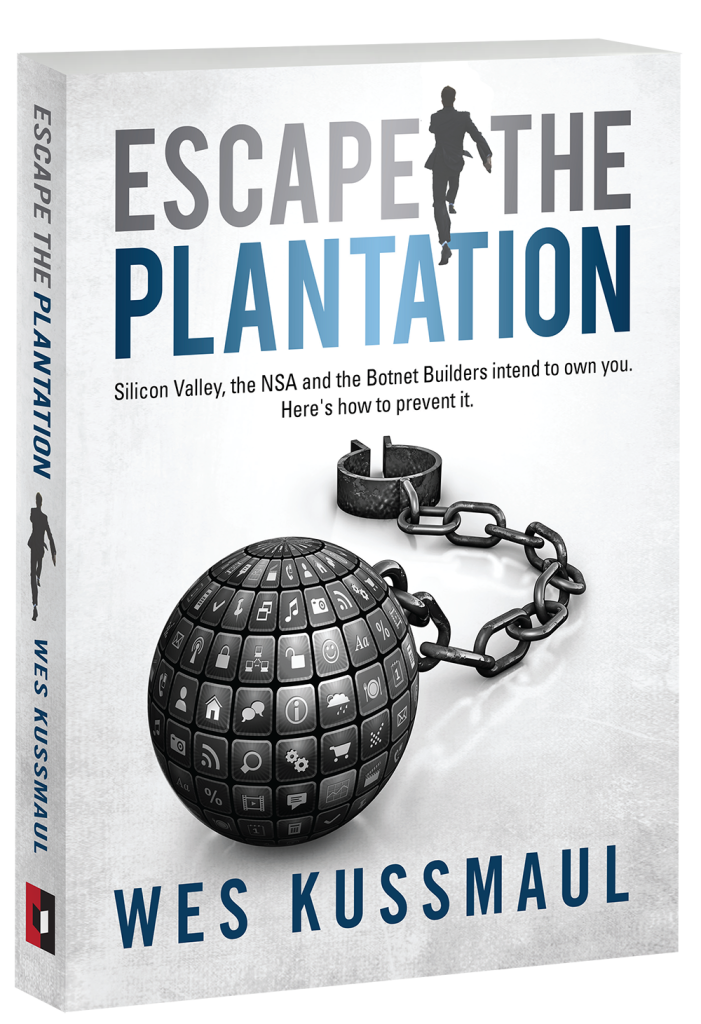
Communities work when members are accountable to each other. That is what the Authenticity Alliance is building toward. Escape the Plantation is a free read on why online spaces went wrong.
More writing on this subject is collected at cdmworlds.