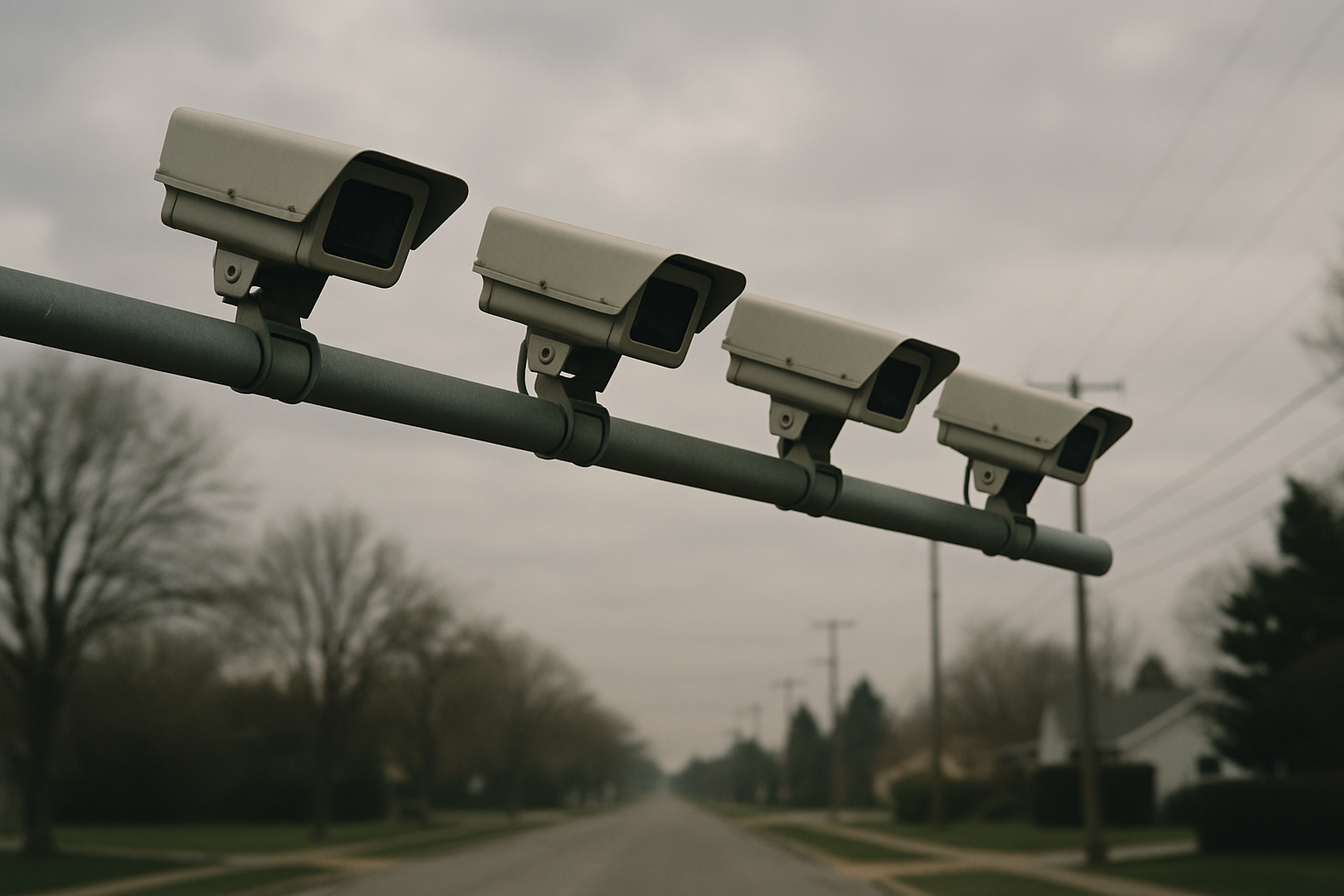
Officers across dozens of jurisdictions ran searches through a large automated license plate reader network and typed nonsense into the field that was supposed to record why they were searching. Entries included ‘LMAO,’ ‘idk,’ ‘hehe,’ and random keyboard strings like ‘asdfg.’ An analysis by the Electronic Frontier Foundation, covering searches made from 2023 through late 2025, surfaced these entries and shared the findings with a news outlet. The company behind the system has since changed how the reason field works, though the specifics of that change have not been fully disclosed.
What happened
The network in question spans thousands of cameras across well over a thousand cities and towns. That scale matters because a single officer, sitting at one terminal, could pull location data from an enormous geographic area in one search — with nothing on record to explain why.
The reason field existed as a built-in check. The idea was that every search would have a documented justification, creating a log that supervisors or auditors could review. In practice, officers filled it with jokes and gibberish. The entries the EFF surfaced are not edge cases — they span multiple jurisdictions and a period of roughly two years.
The company has made a change to the field since these findings emerged, but what that change actually does has not been explained publicly.
Who is affected
The most direct impact falls on ordinary drivers. If your vehicle was near one of these cameras during the period covered, your plate data may have been pulled in a search that had no documented reason behind it. You would have no way of knowing.
Residents in the contracting cities and towns are also affected in a different sense. Their local governments approved this technology and presumably did so on the understanding it would be used responsibly. The documented behavior raises questions about whether that assumption was ever tested.
Civil liberties organisations, including the EFF, have argued for tighter controls on automated license plate readers for years. This analysis gives those arguments a concrete factual basis. The company itself now faces reputational and regulatory pressure, on top of separate cases of police misuse that have been reported previously.
What the real risk is
This is the core problem with police surveillance accountability when it relies on self-reporting: a nonsense entry and a legitimate entry look identical in a log. An officer tracking an ex-partner, monitoring a neighbor, or acting on a personal grudge with no open case behind it could enter ‘LMAO’ and produce a record that is functionally the same as one entered for a kidnapping investigation.
There is no practical mechanism for the people whose data was pulled to find out it happened, let alone dispute it.
The pattern also raises a broader question. If the reason field — a visible, documented control — was treated as a checkbox, it is reasonable to ask whether other oversight mechanisms in the system are being treated the same way. City councils and oversight bodies that approved this technology were told it would be used for serious crimes. The gap between that pitch and what the EFF documented is significant.
What to do today
These steps are things you can take this week, without a lawyer or a technical background.
- Find out if your city uses this network. Check your local police department’s website or search your city council’s meeting minutes for references to automated license plate reader contracts. This is usually public record.
- Submit a public records request. Ask your local police department for its written acceptable-use policy for license plate reader systems and any records of disciplinary action for misuse. Most jurisdictions have an online form for this.
- Contact your city council representative directly. Ask whether they have reviewed usage reports from the platform and whether an independent audit has ever been conducted. A direct written question creates a paper trail.
- Follow the EFF’s reporting. Their analysis is the primary source of documented evidence on this issue, and they publish plain-language guidance on how residents can push for accountability at eff.org.
Related reading
- When Science Rewrites the Map: What Shrinking Worlds Mean
- AI Safety Warnings From Labs: Should You Trust Them?
Originally reported by 404media.co. This article summarises that reporting and adds practical guidance.
Fake accounts, scams and manufactured noise spread because the internet has no reliable way to prove who anyone actually is. Get our posts on how these tactics work, plus a free copy of Escape the Plantation.
Why this keeps happening
Surveillance tools get sold to local governments using the most extreme possible use cases — kidnappings, murders — which makes opposition look callous. But the day-to-day reality of how the tool gets used is rarely part of that sales conversation. Accountability fields get built in to satisfy a compliance requirement, not to create genuine oversight. Without independent audits and real consequences for misuse, those fields stay empty in every sense that matters.
Frequently asked questions
Can I find out if my license plate was searched without a real reason?
Not easily. There is no standard notification system that alerts drivers when their plate data is queried. A public records request to your local police department may surface some information, but the depth of what gets disclosed varies significantly by jurisdiction.
Did the company break any law by allowing these searches to go through?
That has not been established. The EFF’s analysis documents the behavior; it does not make a legal finding. Whether any law was violated would depend on the specific statutes in each jurisdiction and the terms of each government contract.
Has the reason field change actually fixed the problem?
That is not known. The company has not publicly explained what the change involves or whether it prevents nonsense entries, flags them for review, or does something else entirely. Without an independent audit, there is no way to verify whether the underlying problem has been addressed.